ServicesWater Softener Installation
Water Softener Installation in Glendale
We install water softeners sized to your home, your water use and your plumbing. Before we cut any pipe, you get the whole job in writing: which unit, which fittings, how much labor. That paper is the job. Nothing gets tacked on later.
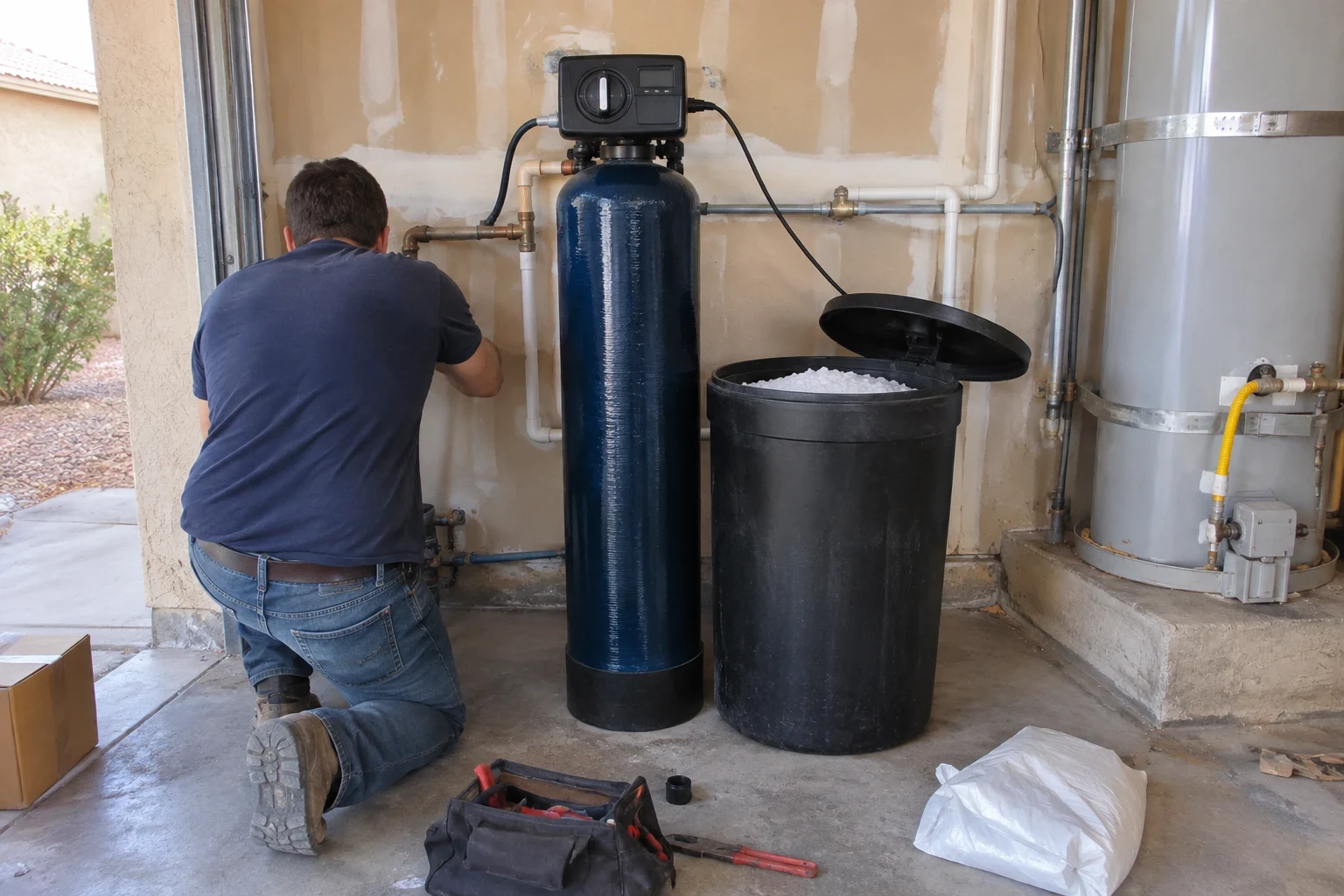
When a softener is the right fix
Hardness is calcium and magnesium dissolved in your water. Inside a softener, water passes over a bed of resin beads that pull those minerals out and hang onto them. Every so often the unit flushes the beads with salty brine and sends the minerals down the drain. Once it's running, you stop seeing white buildup on faucets, cloudy film on glasses and scale piling up in the water heater. Water around Glendale tends to run hard, so fixing it at the source beats scrubbing forever.
The softener goes in where the water line enters the house. That way every faucet, shower and appliance gets treated water. Most installs fit inside part of a day. We size the unit by the number of people in your home and your daily water use, not by what happens to be on the truck.
You get the scope on paper before anything starts. If our visit shows something that changes the work, like a shutoff that won't turn or nowhere close to drain, we write it into the quote. On install day we do what's on that paper, and nothing more unless you approve it.
What the install covers
Picking the right size
We base capacity on how many people live in your home and how much water you use each day. Too small, and the unit regenerates constantly. Too big, and you buy salt you never needed.
Tying into your main line
If there's a softener loop already, we connect to it. If not, we build one. We always add a bypass valve, which lets you shut the softener out of the line and keep water flowing to the house.
Drain line and brine tank
The unit rinses itself out during regeneration, so it needs a drain connection with a proper air gap. We place and connect the brine tank and pour in the first bags of salt.
Hauling off the old unit
When a worn-out softener is part of the job you signed off on, we unhook it and take it with us.
Startup and settings
We flush the new system, dial in the hardness setting and the regeneration schedule, and look over every joint for leaks before we leave.
A quick walkthrough
We show you where the bypass is, how to check the salt level and what the display means. It takes a few minutes, and you won't need the manual.
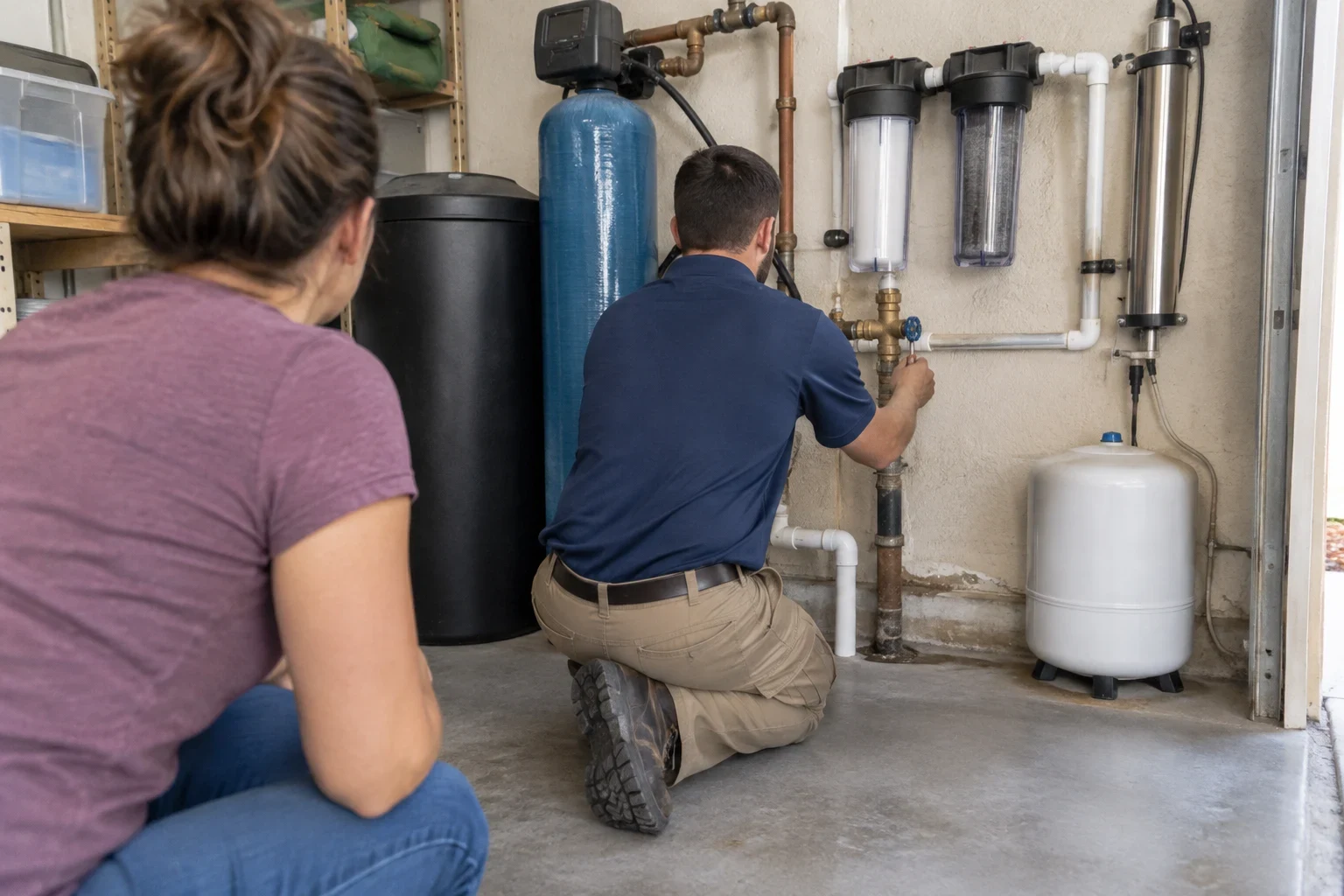
Signs your home needs a softener
- White crust on fixtures
- Chalky buildup on faucets, shower heads and glass shower doors is mineral scale. Scrub it off and it comes right back within a couple of weeks.
- Spotty dishes and glasses
- If glasses come out of the dishwasher cloudy, hard water is the usual cause, not the detergent.
- Water heater making noise
- Crackling or banging sounds from the heater usually mean minerals have settled in a layer at the bottom of the tank. Heating through that layer takes more energy and shortens the heater's life.
- Soap that won't lather
- Hard water fights soap. You use more shampoo and laundry detergent than you should, and you still feel a film on your skin after showering.
- A softener that quit
- The salt level never drops, the water feels hard again or the display is blank. A repair sometimes does it. Other times a new unit makes more sense, and we'll tell you straight which one.
How the job goes
- 1
Phone call
Tell us how many people are in the house and what you're seeing at the faucets. We set a time to come out.
- 2
Site visit
We locate the spot where water enters the house, check whether a softener loop is already there and note where the nearest drain and outlet are. A lot of homes around here have the loop in the garage, which makes for an easy hookup.
- 3
Written quote
You get a quote that lists the unit, each part and the labor. Any valve or fitting that needs to be swapped is on there too. You make the call with everything spelled out.
- 4
Install day
We cover the floor, shut off the water, plumb in the softener and hook up the drain and brine tank. Water goes back on, and we clean up the work area.
- 5
Startup and check
We run the first regeneration, check for drips and set the controls. Then we show you how it all works.
What sets the price
Every house is plumbed a little differently, so we price your install after we've seen it. The quote breaks the job into separate lines. That way you know what each part of the work costs and can line it up against any other bid.
- Capacity and control valve
- A bigger household needs a softener that can handle more water between cleanings. A metered valve, which regenerates based on how much water you've actually used, costs more up front than a timer valve. Over a few years it usually uses less salt.
- Loop already in place or not
- Many houses were built with a softener loop already plumbed. When that's there, the hookup is short work. When it isn't, we tap the main line and build the loop, which means more pipe and more labor.
- How far to the drain and outlet
- The unit has to dump rinse water and needs power. When the nearest drain or outlet is across the garage, running a line to it adds time, and it shows up as its own item.
- Old parts and old equipment
- A shutoff that won't close, green crusty fittings or a dead softener that has to be pulled out all take extra time. We flag them on the first visit so they're in the quote, not a surprise later.
Water softener install questions
- How long does the install take?
- Usually a few hours. If your home already has a softener loop, it goes quicker. Building a new loop off the main line adds time, and we'll tell you that before install day so you can plan around it.
- Will my water be off the whole time?
- No. We shut it off while we cut into the line and connect the unit. As soon as the bypass is in place, the water can come back on while we finish the drain and brine tank.
- Is there a warranty on the labor?
- There is for salt delivery customers. We offer free warranty labor for active salt delivery subscribers, so if you keep an Automated Salt Delivery subscription going, our time on covered softener repairs isn't billed separately. Your salt also shows up without you having to think about it.
- Will soft water taste salty?
- Most people never notice it. The softener swaps hardness minerals for a small amount of sodium. If you want drinking and cooking water with less of it, a Reverse Osmosis System under the kitchen sink handles that.
- Does a softener remove chlorine too?
- No. It only takes out hardness minerals. If chlorine taste or smell bothers you at every tap, Whole-Home Filtration is the fix. We can put both in during the same visit if you'd like.
- Can the price change after I get the quote?
- Only if you approve it. If we open up a wall or a fitting on install day and find something nobody could see before, we stop and show you. Any added work gets written up and signed off by you before we touch it.
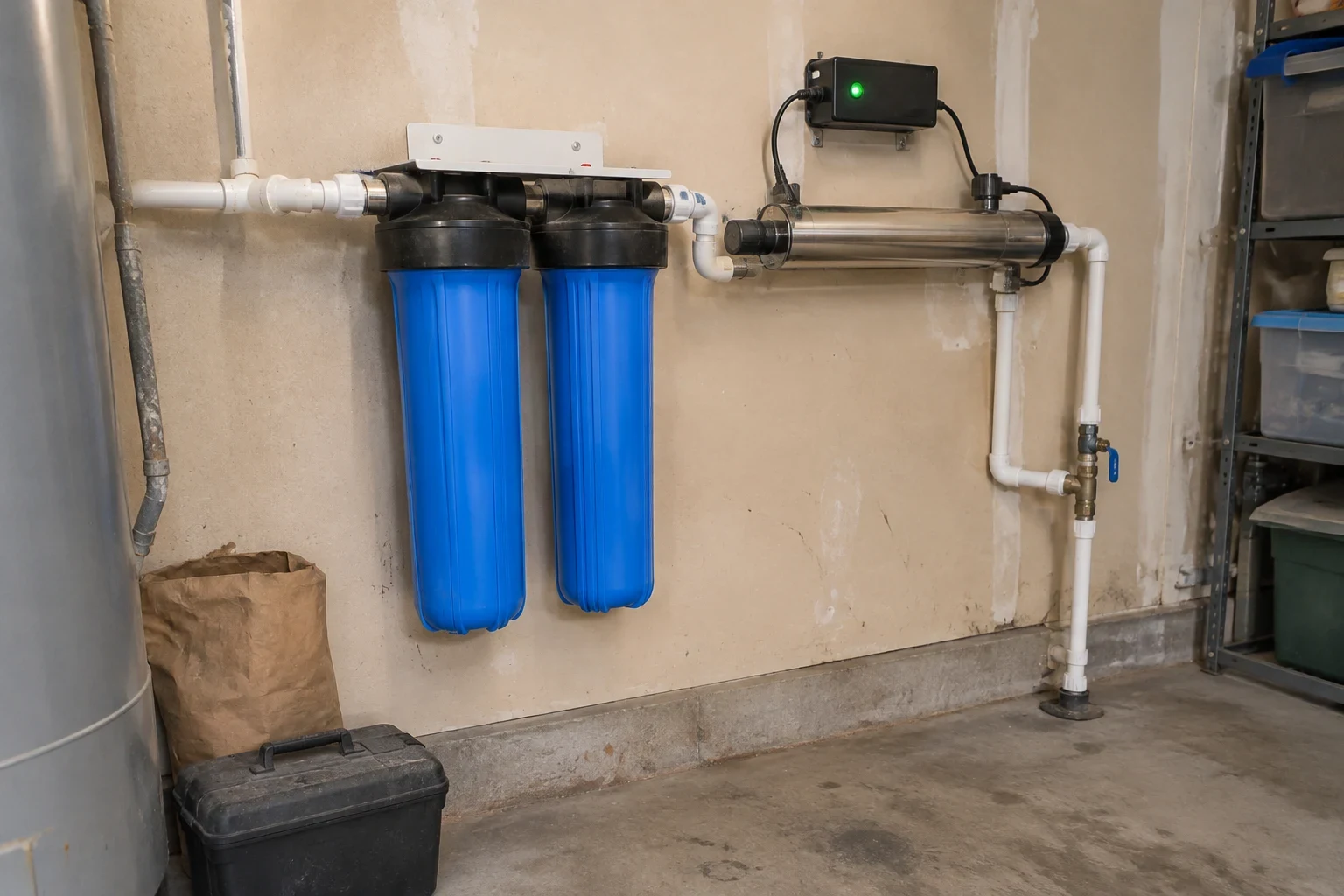
Done scrubbing scale off the faucets?
Give us a ring and describe what your water is doing. We'll come see your setup and leave you a written price to look over before you decide anything.